Brett begins teaching students at home
The Life ListBrett Bohlinger’s move into homebound teaching turns an uncertain attempt to satisfy a life-list goal into a vivid encounter with the work she wants to do. Rather than teaching a classroom of students, she carries lessons into their homes, where illness, injury, family life, and housing insecurity shape the conditions of learning. Her first visits—to Amina Adawe and Sanquita Bell—show her discovering that individual attention can make teaching feel less like an assignment and more like a calling.
From a School Assignment to Homebound Teaching
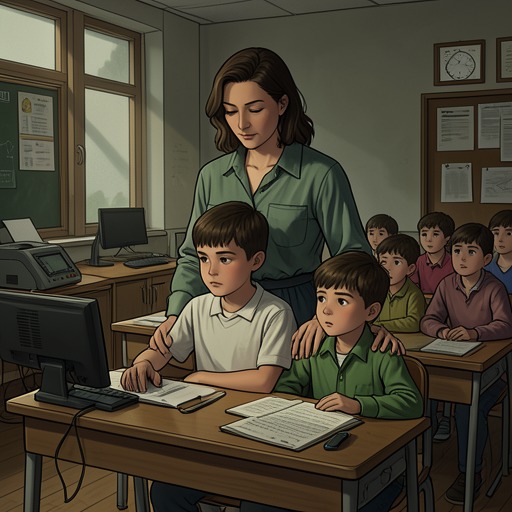
Brett approaches the new work after a long-term substitute assignment has already tested her willingness to teach. When a teacher goes into labor three weeks early, Brett is asked whether she can take over for as long as six weeks. She calculates that this would mean thirty days of work toward a teaching goal on her list, imagines fleeing through the exit doors, and then decides to stay. Her choice is framed by the instruction to do something every day that scares her: she accepts even as anxiety makes the exit sign seem like an escape route.
The homebound opportunity arrives through Mrs. Bailey, the principal Brett met at Douglas Keyes. Mrs. Bailey recommends Brett for work teaching sick children in their houses or in the hospital. Brett tells Brad Midar that she has an interview the next morning, while insisting she may not get the job; the principal, however, thinks it could suit her. The contrast matters: Brett has not yet become confident about teaching, but someone who has seen her work has identified a possible fit.
On the Monday she is due to meet her new students, Brett dresses carefully in navy wool slacks and a heather-gray cashmere sweater her mother bought her the previous Christmas. She hopes to make a good impression, but the day begins without the support she expected. Her supervisor tells her that Eve has had a family emergency and will not return, leaving Brett to manage on her own. The change gives the first visits an immediate edge: she is entering unfamiliar homes and situations while still finding her footing in the job.
Amina’s Home and the First Lesson
Brett’s first student is Amina, a third-grader who lives on South Morgan. The address unsettles her before she has met the family: Amina’s number hangs above the entrance of an abandoned-looking tenement. Brett notices the contrast with the private office she once had at Bohlinger Cosmetics, with its green plants and stocked refrigerator, and feels anger at the predicament in which she finds herself. At the foot of the stairwell, a flickering exposed bulb and obscenities coming from a neighboring apartment intensify her apprehension.
Then a woman in a silk hijab opens a door at the end of the hall and welcomes Brett into apartment four. The change in atmosphere is sharp: inside, the tidy apartment smells of baked chicken and spices, and Amina rests on a threadbare sofa with her plastered leg raised on pillows. Brett removes her shoes and introduces herself as the teacher who will work with Amina while she recuperates. The visit is not an abstract lesson in disadvantage; Brett has to cross the uneasy threshold, meet the family, and begin teaching in the space where Amina is recovering.
Amina explains in broken English that she moved from Somalia the previous winter. One leg had been too short, she says, and a doctor fixed it; now she is sad to be missing school. Brett reassures her that they will work together so she can return on track, then takes a reading text from her leather bag. Amina’s younger brother, Abdulkadir, appears and hides behind his mother’s jilbāb. Brett repeats his long name, and he responds with dimples; Amina and her mother giggle with pride. That small exchange becomes part of the lesson’s welcome, as much as the book itself.
With Amina propped on the bed and Abdulkadir on his mother’s lap, the family listens to a story about a princess who cannot cry. They study its pictures, ask questions, giggle, and clap. Brett recognizes the scene as the kind of one-room schoolhouse she had wanted: here, the student is eager to learn, and the family joins in. Her delight is a concrete reversal of the fear and reluctance that marked the approach to the building. The home visit gives her an immediate experience of teaching that feels like her own dream.
Sanquita at Joshua House
Twenty minutes later, Brett drives through Englewood to another student’s address. She is relieved when she reaches a large green house, but a sign in the yard identifies it as Joshua House, a shelter for homeless women. Her student, Sanquita Bell, is a high-school senior who is three months pregnant and has kidney disease. Though she is a senior, she is so small that Brett thinks she looks twelve; her tired eyes suggest a life shaped by hardships beyond her age. Brett’s work now unfolds not only around illness but also within a shelter serving women without homes.
Sanquita makes her educational goal plain: she wants help earning her diploma so her baby will know its mother was smart. The request carries an uncertainty about whether Sanquita expects to be there to tell the child herself, and Brett wonders how sick she is. She agrees to help and opens a chemistry book. For an hour, she stays with Sanquita, who finds the subject difficult but listens carefully and keeps trying until she succeeds. Sanquita says that she usually struggles with science but has understood it that day. Brett is proud of the accomplishment, while giving the credit to Sanquita’s own hard work rather than claiming it for herself.
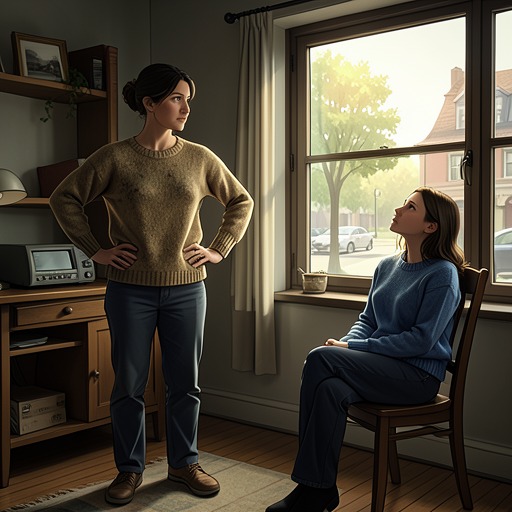
When Sanquita asks when she will return, Brett opens her planner. Sanquita reacts coldly when the schedule seems to mean that Brett only has to see her twice during the week; she closes her chemistry book and says never mind. Brett finds that the only unreserved time the next day is her noon hour for lunch and paperwork. She offers it to Sanquita, who accepts. Sanquita does not smile or thank her, but Brett leaves feeling warm. The extra visit is a practical change to Brett’s schedule and a measure of her growing investment: she makes room for the student in front of her rather than treating the minimum appointment as enough.
A Calling Made Concrete
The first rounds of homebound teaching establish a pattern in which the work is shaped by the particular student and setting. At Amina’s home, a reading story gathers a child, her brother, and their mother around the lesson; at Joshua House, chemistry becomes a step toward Sanquita’s diploma and her hope for her child. Brett’s teaching involves listening to what each student wants, working through what is difficult, and adapting her time to the need she encounters.
The event also changes the meaning of Brett’s effort to pursue a teaching goal. Earlier, the prospect of serving a six-week substitute term had brought her close to escaping through the exit. In the first home lessons, the work itself supplies a reason to stay: Amina’s eager attention makes Brett recognize a teacher’s dream, and Sanquita’s persistence makes an hour of chemistry feel consequential. The narrative places anxiety beside welcome, and an institutional assignment beside the intimacy of instruction at home. Brett begins the job unsure whether it will suit her; these encounters show why it might.